For immediate release
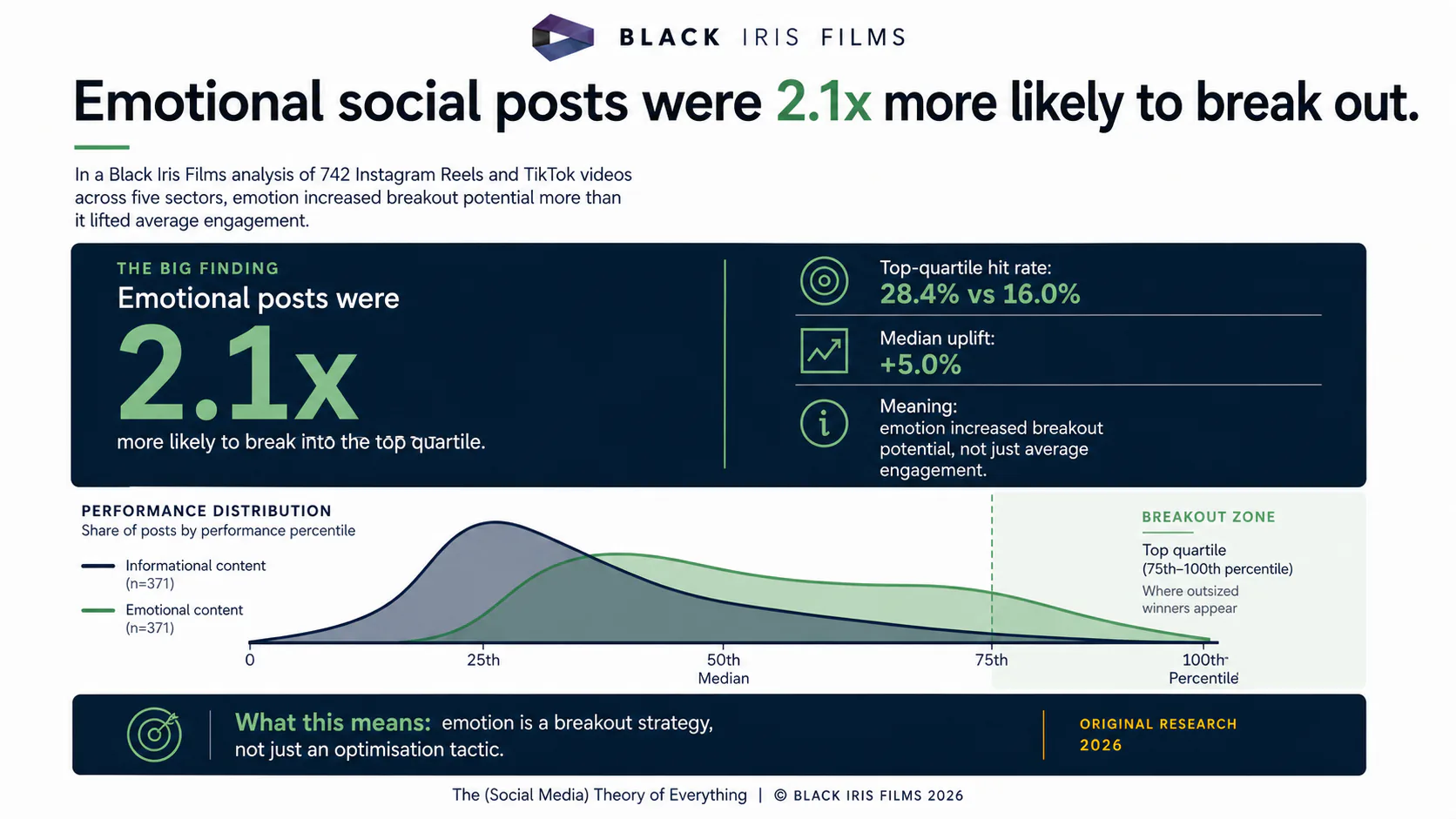
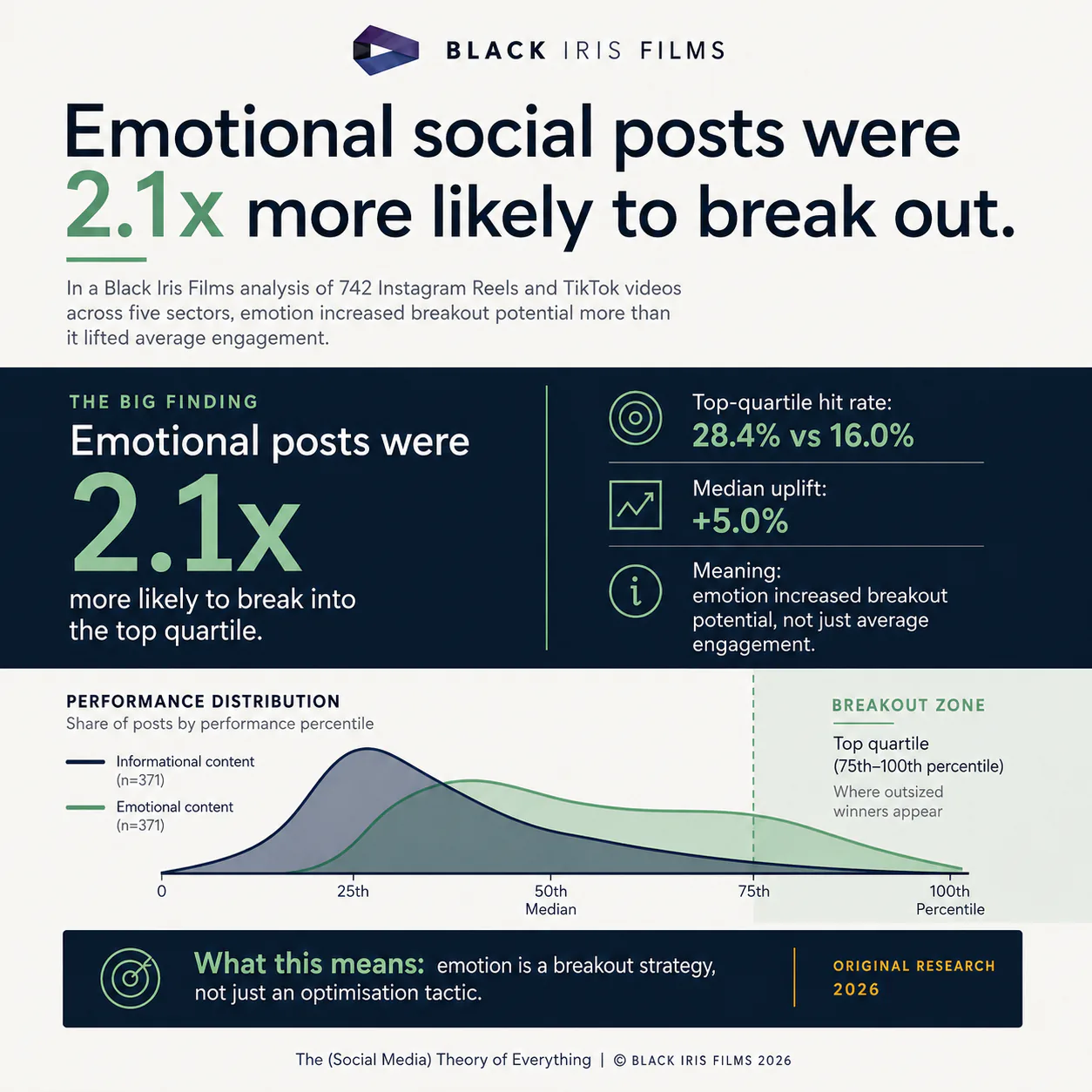
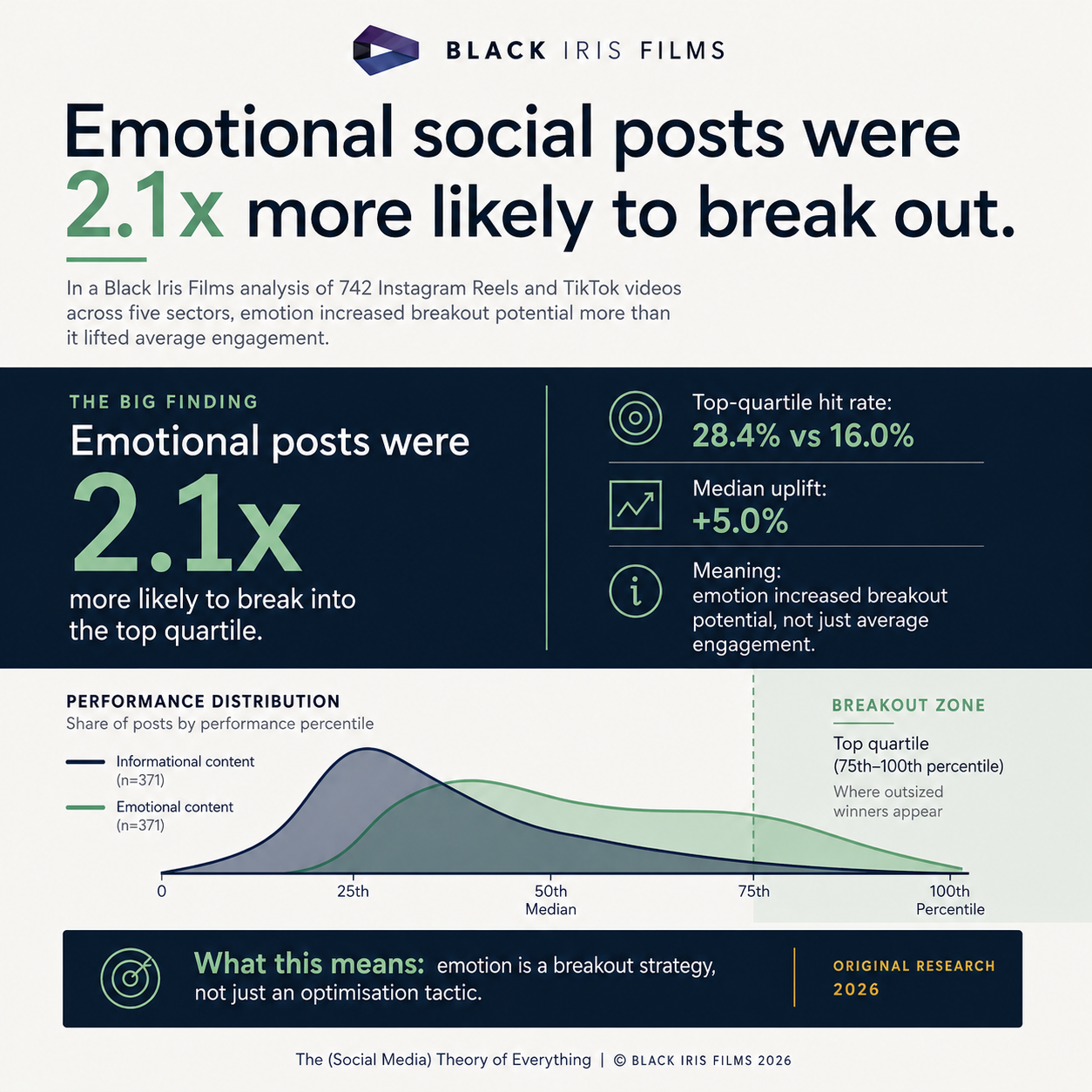
New Black Iris Films study finds emotional social posts are 2.1x more likely to break out
Analysis of 742 Instagram Reels and TikTok videos suggests emotion is a breakout strategy, not just an optimisation tactic.
Sydney, Australia, 2026 — Black Iris Films has released The (Social Media) Theory of Everything, a new analysis of 742 Instagram Reels and TikTok videos across five sectors, comparing the performance of emotion-led and informational social content.
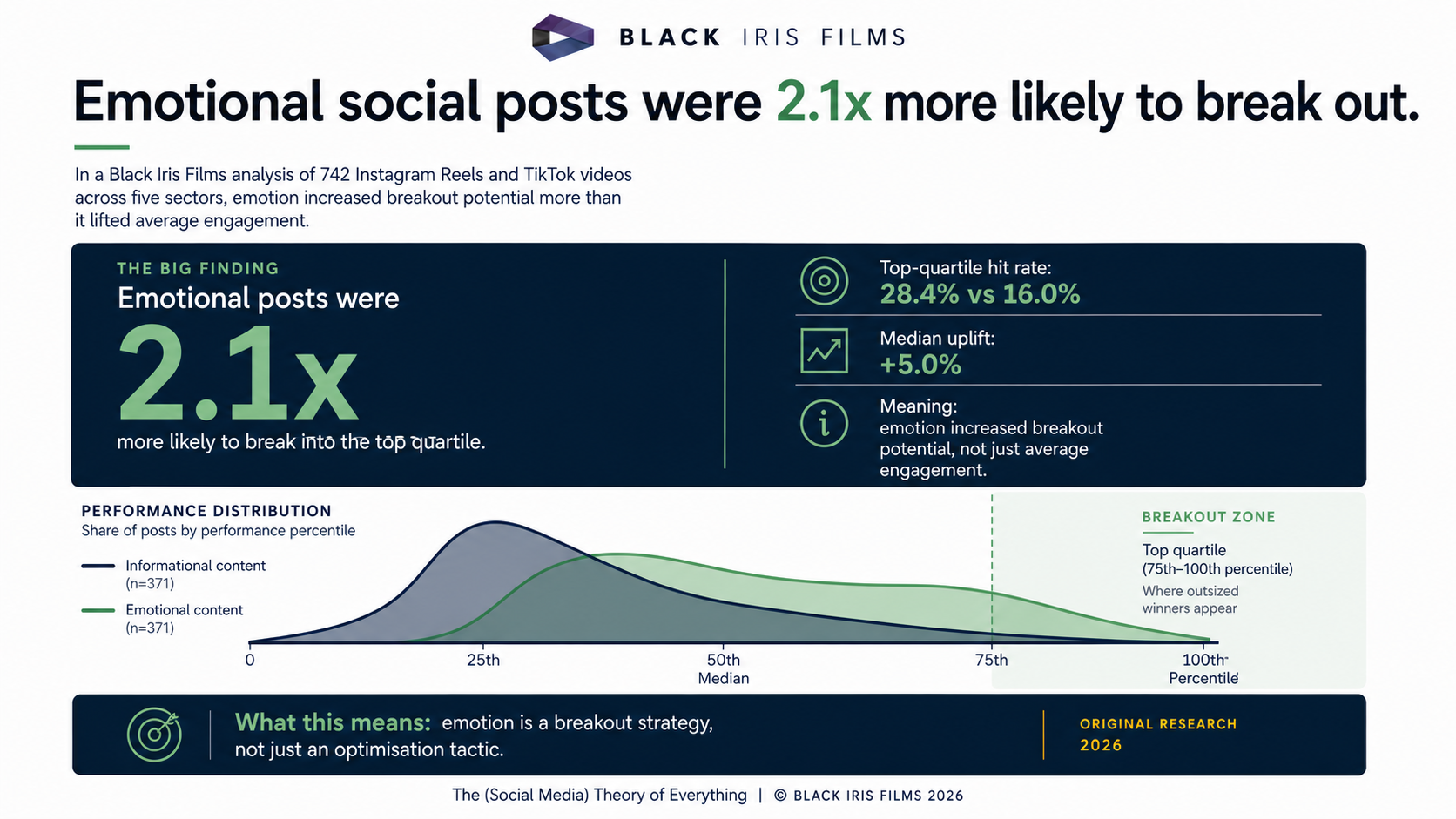
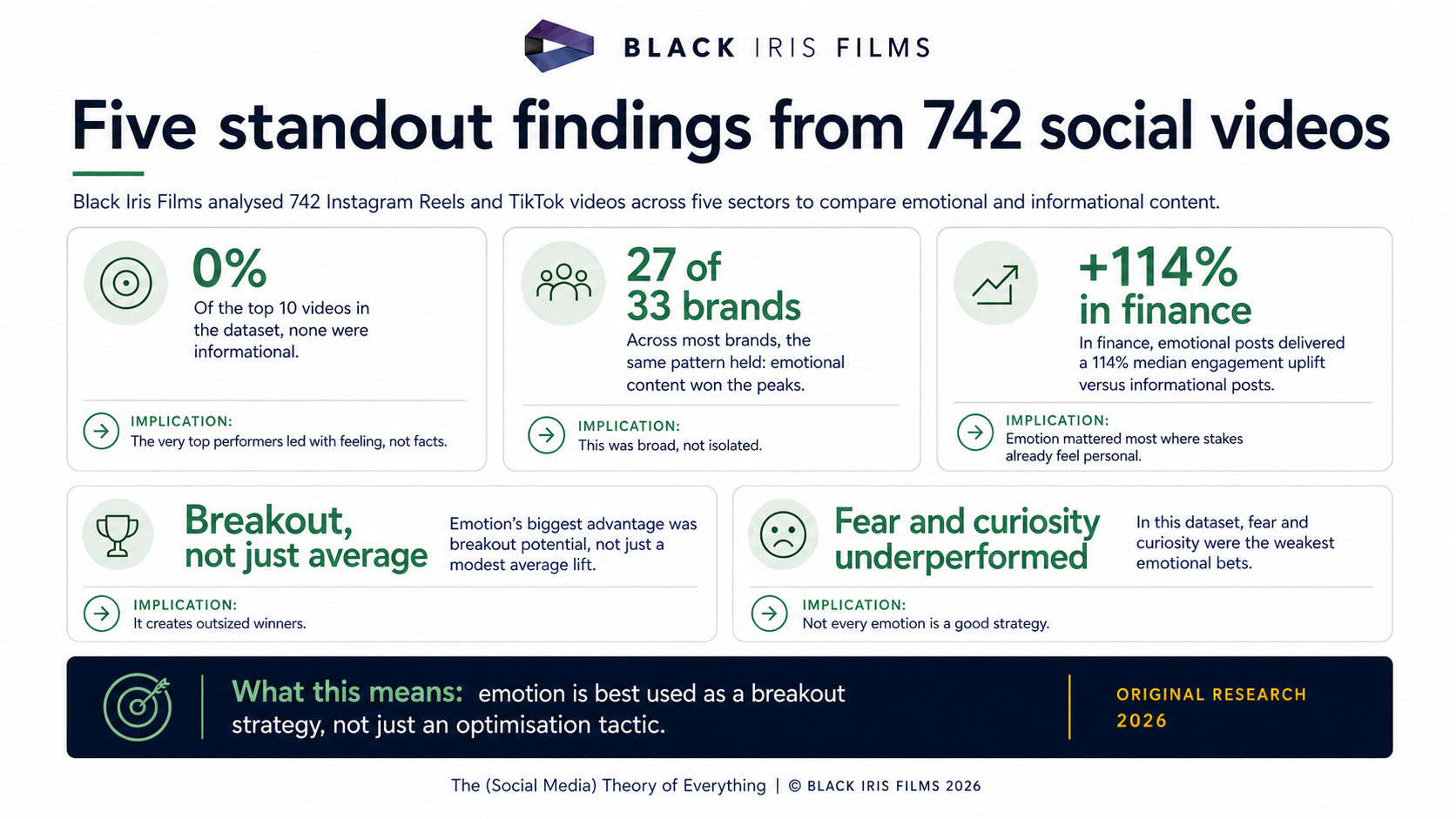
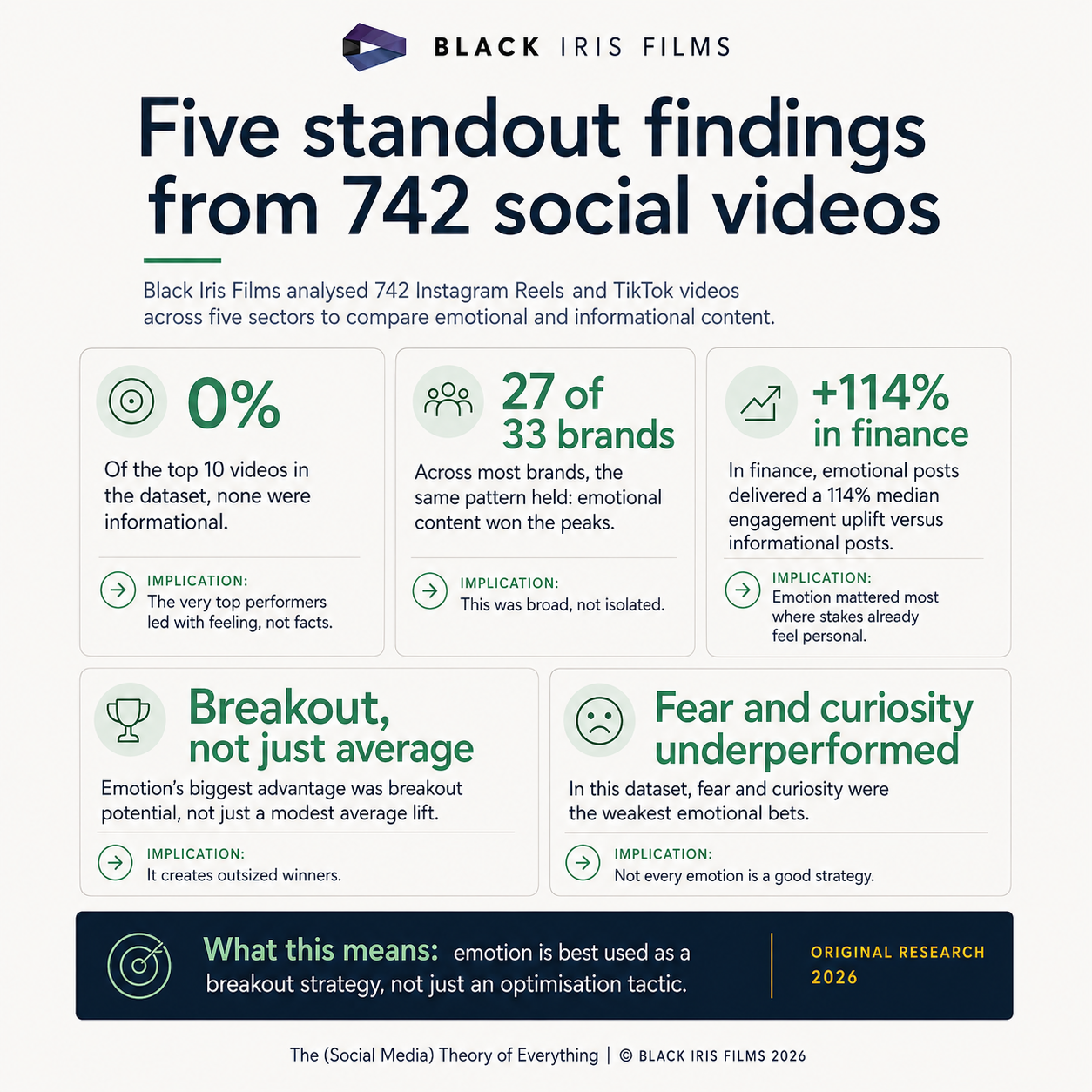
The study found that emotional posts were 2.1x more likely to break into the top quartile than informational posts. While emotion produced only a modest median uplift overall, its biggest advantage appeared at the top end of performance: emotional content was far more likely to create breakout results.
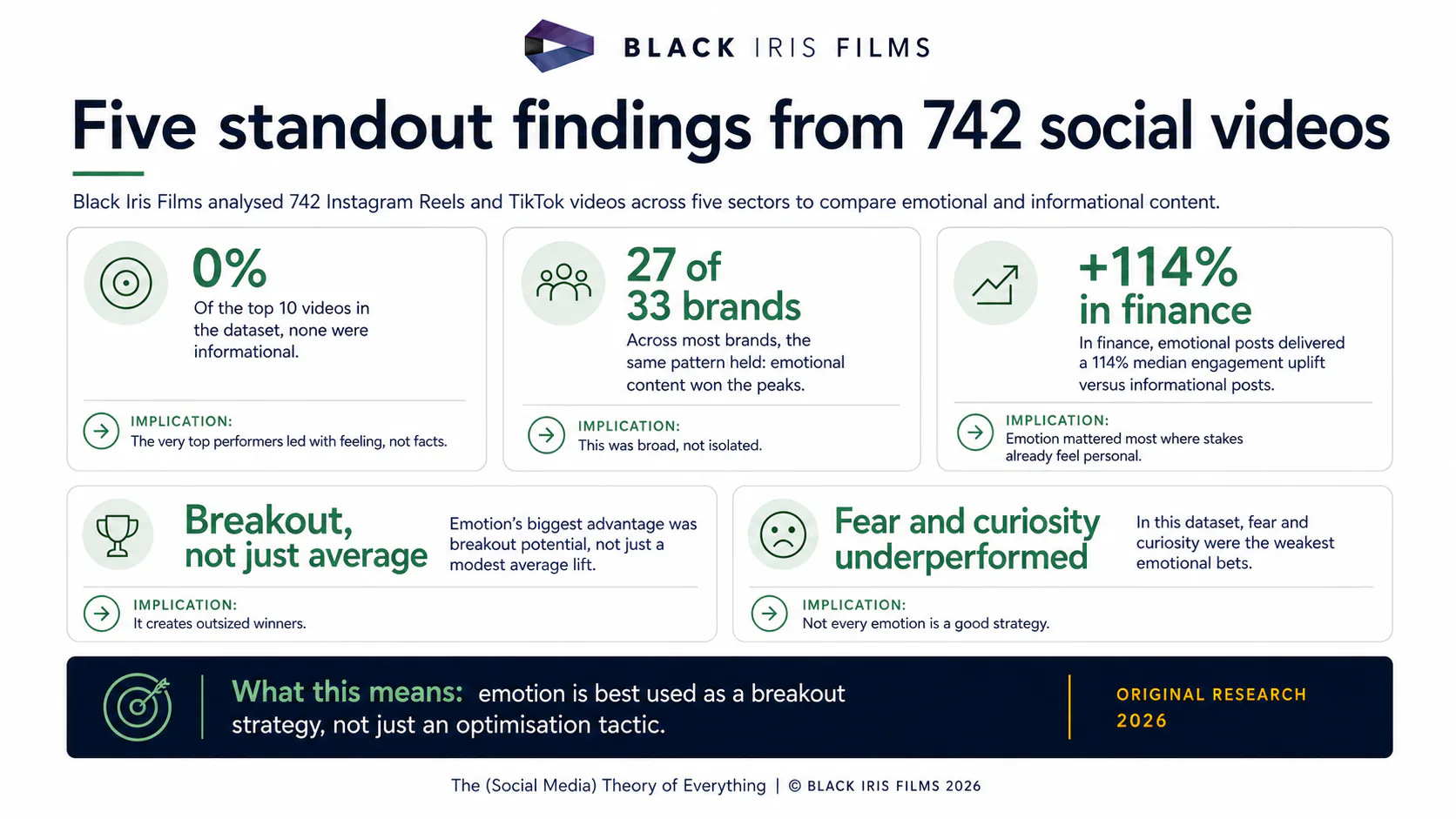
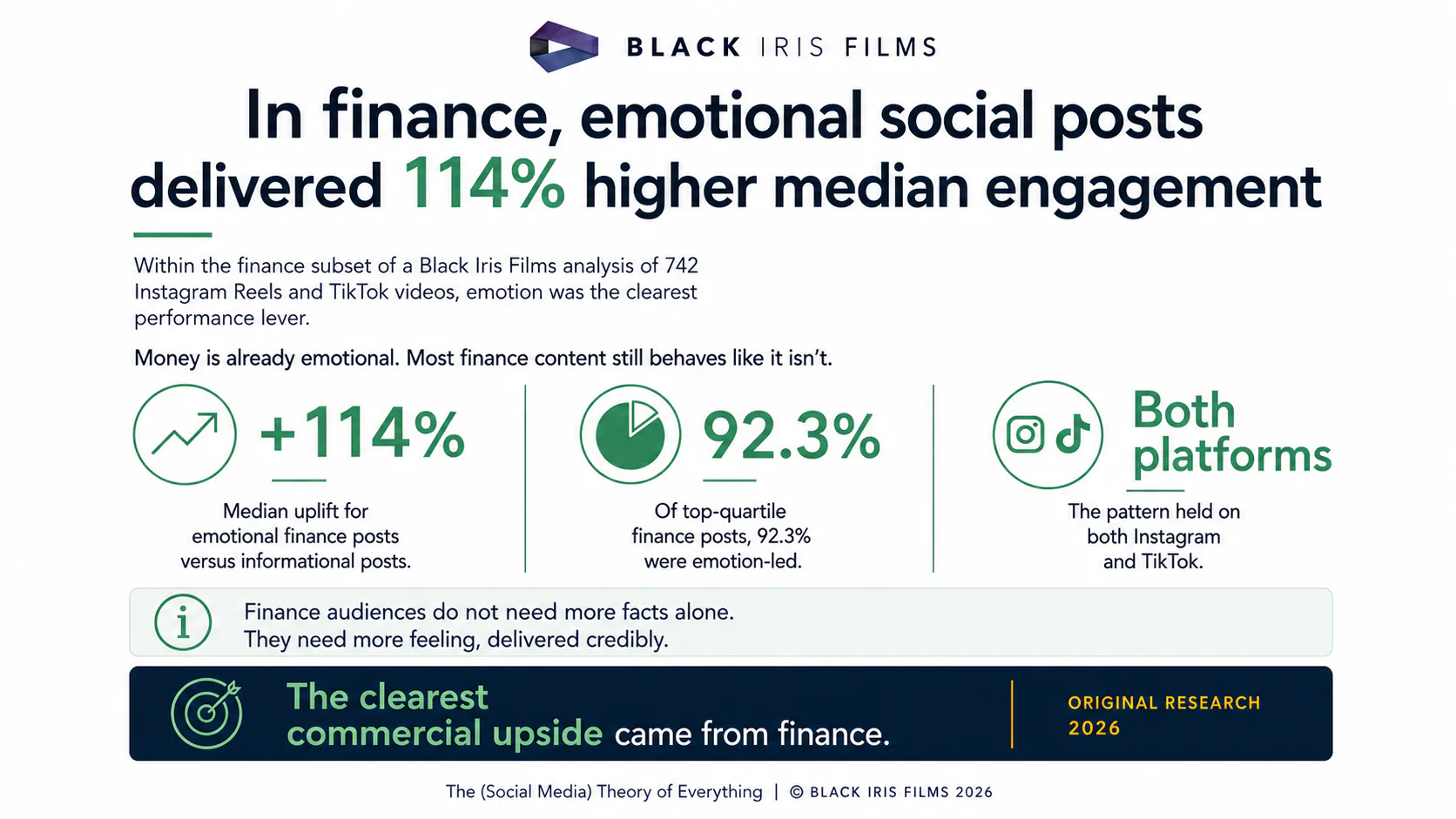
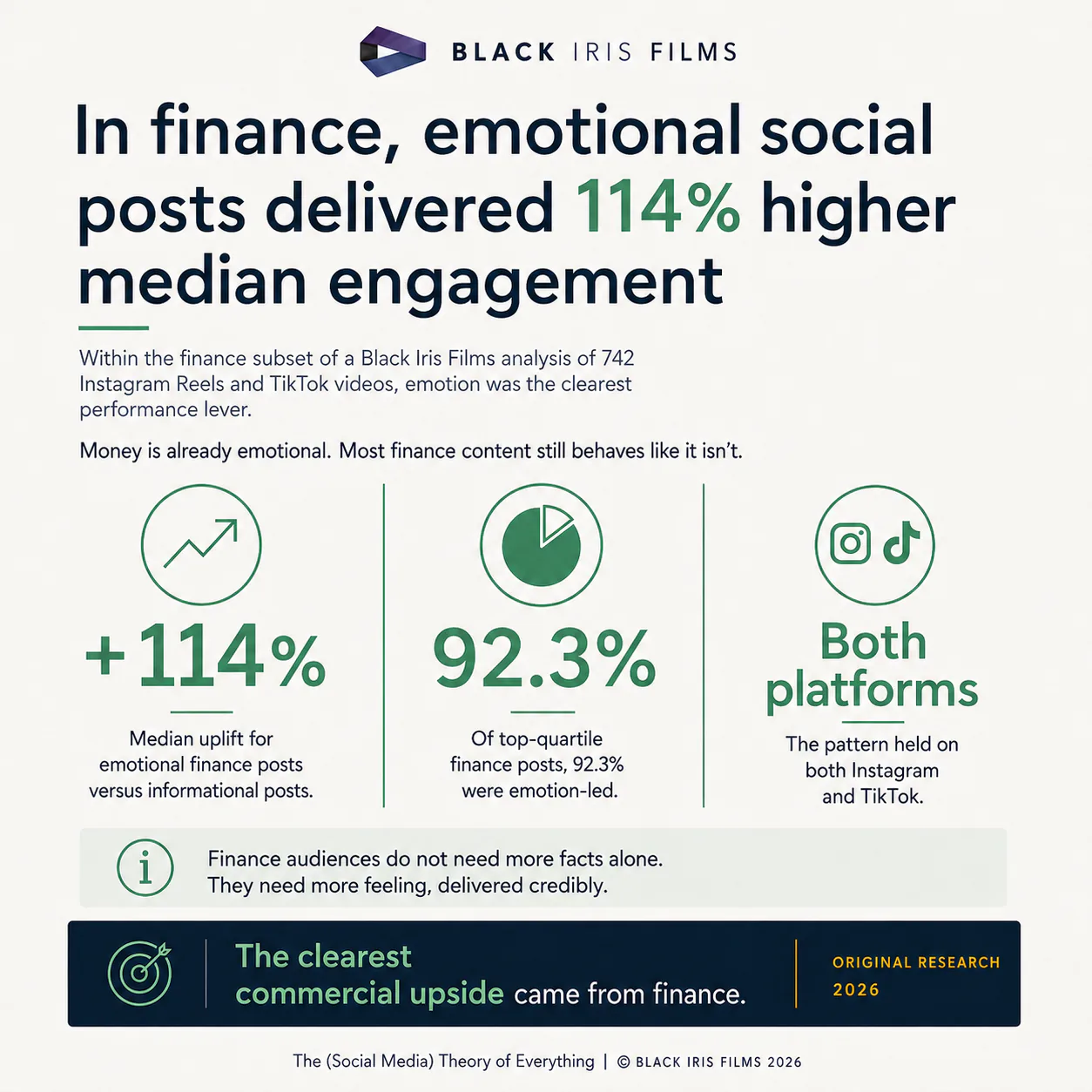
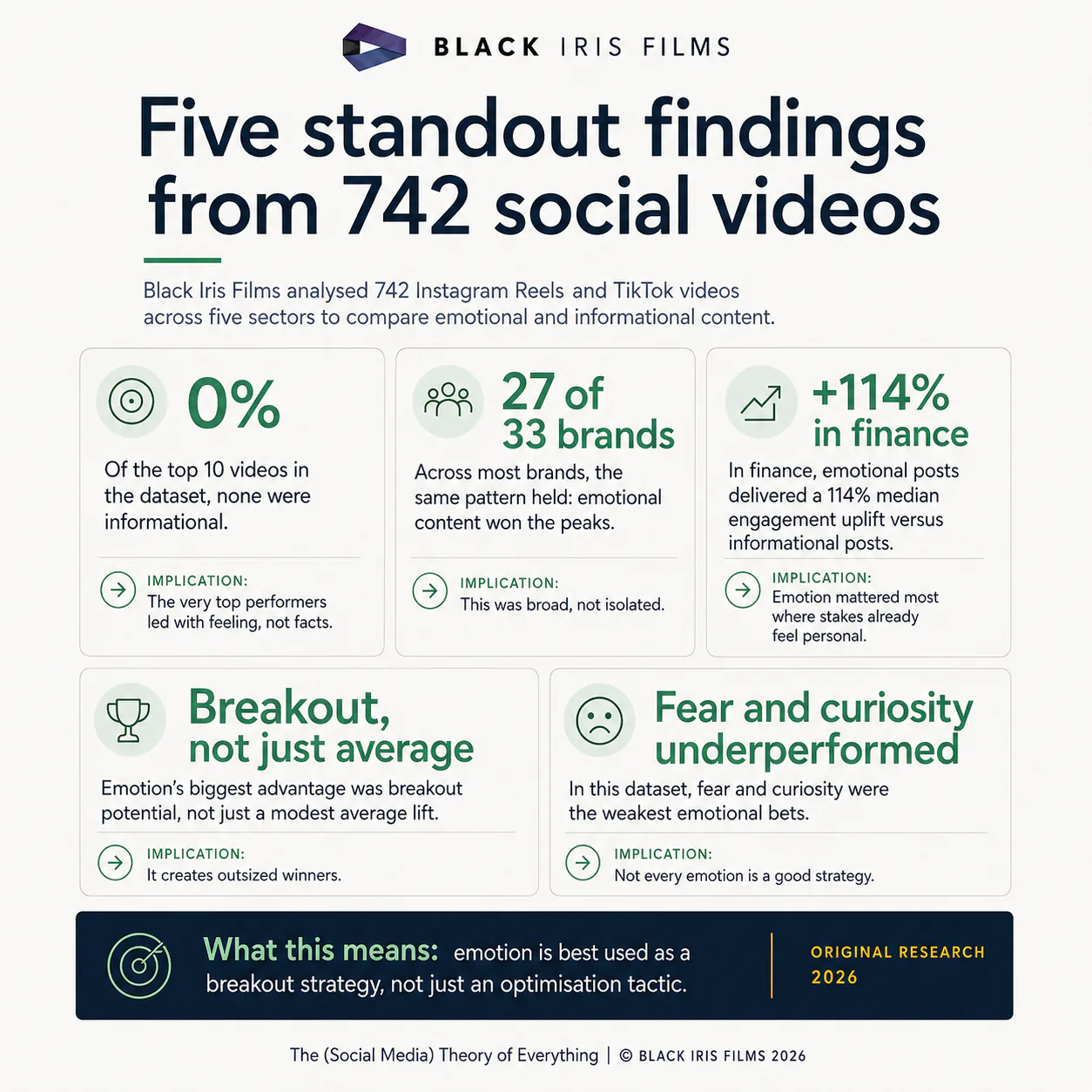
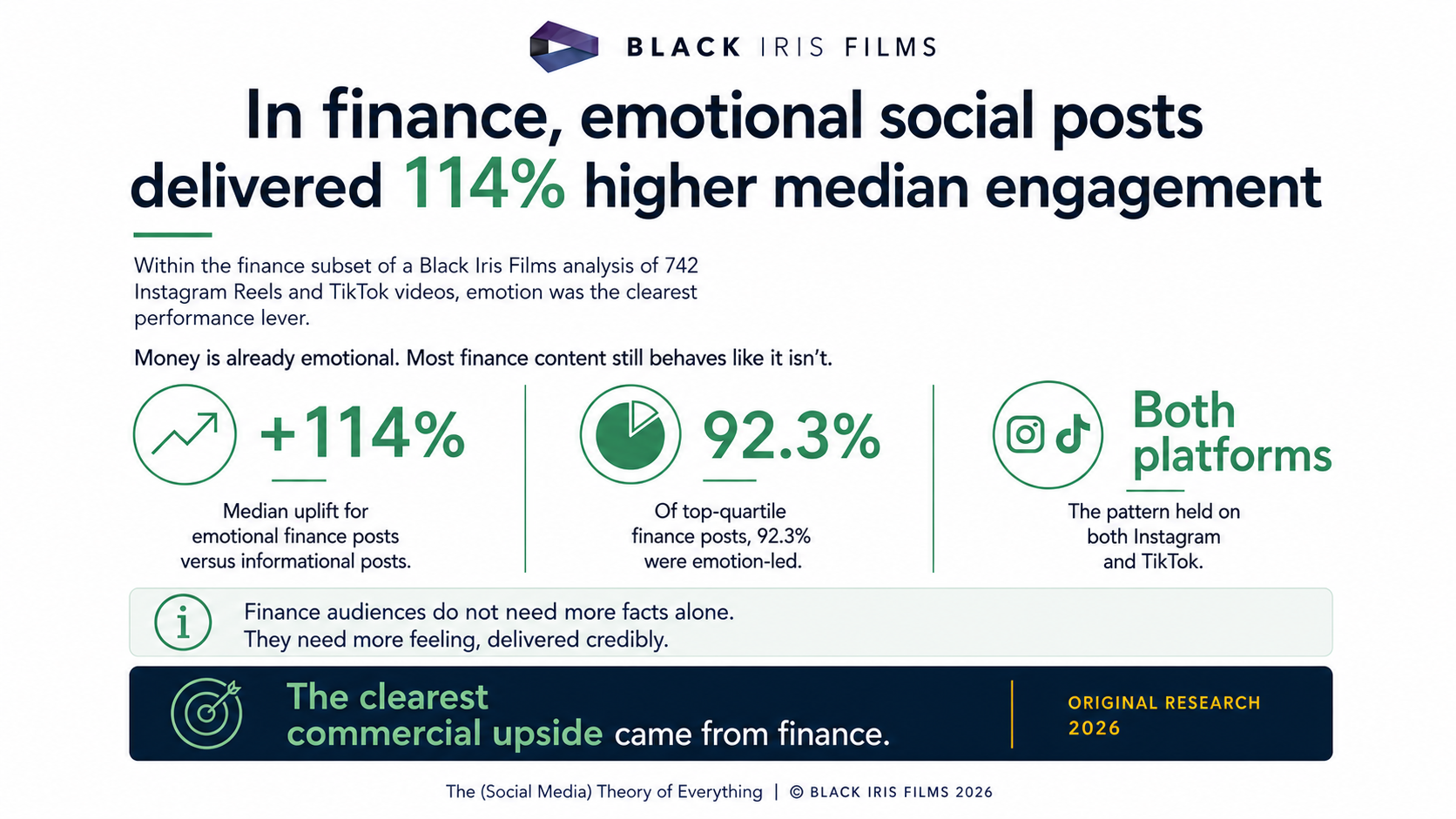
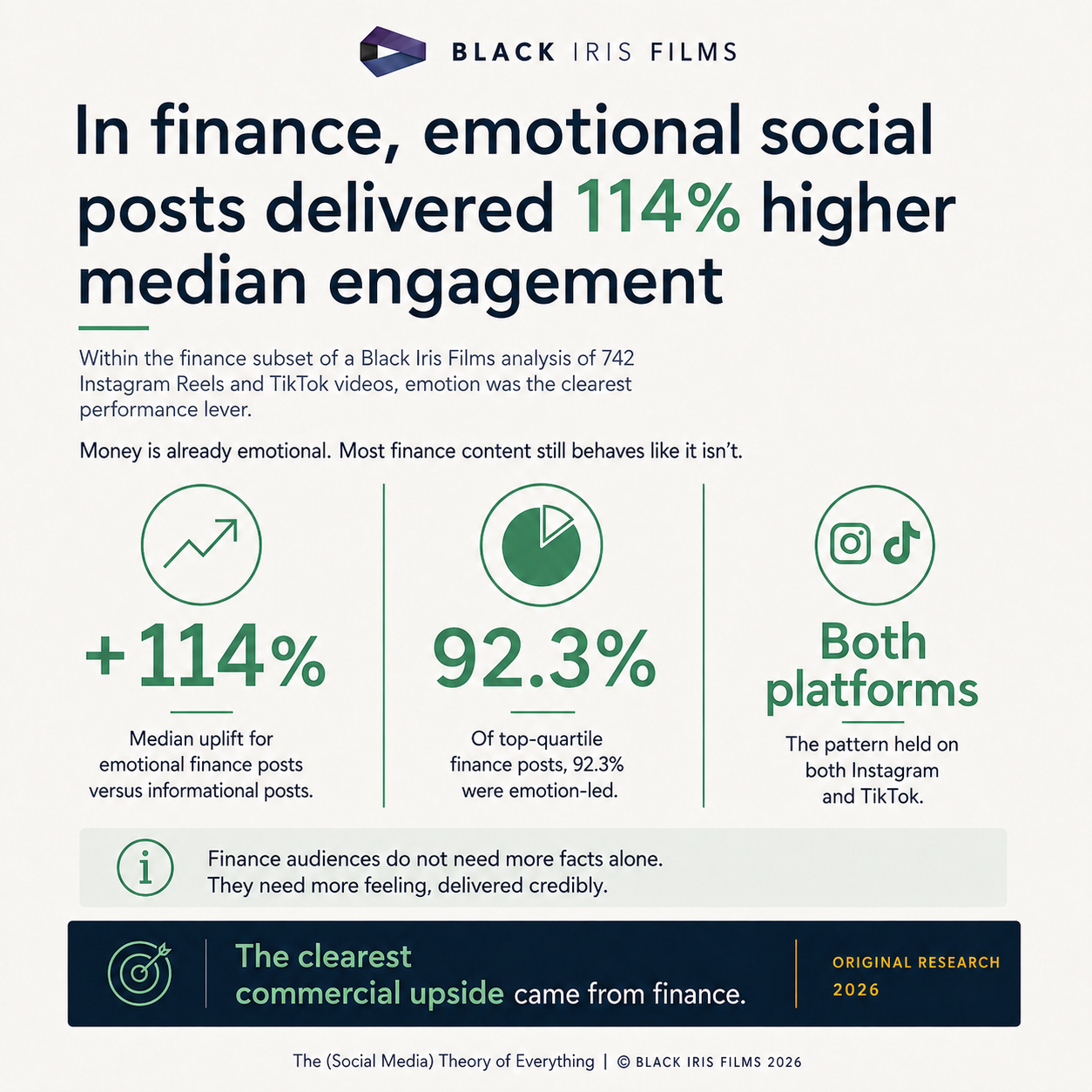
The clearest commercial signal came from finance. Within the finance subset, emotional posts delivered a 114% higher median engagement rate than informational posts, and 92.3% of top-quartile finance posts were emotion-led.
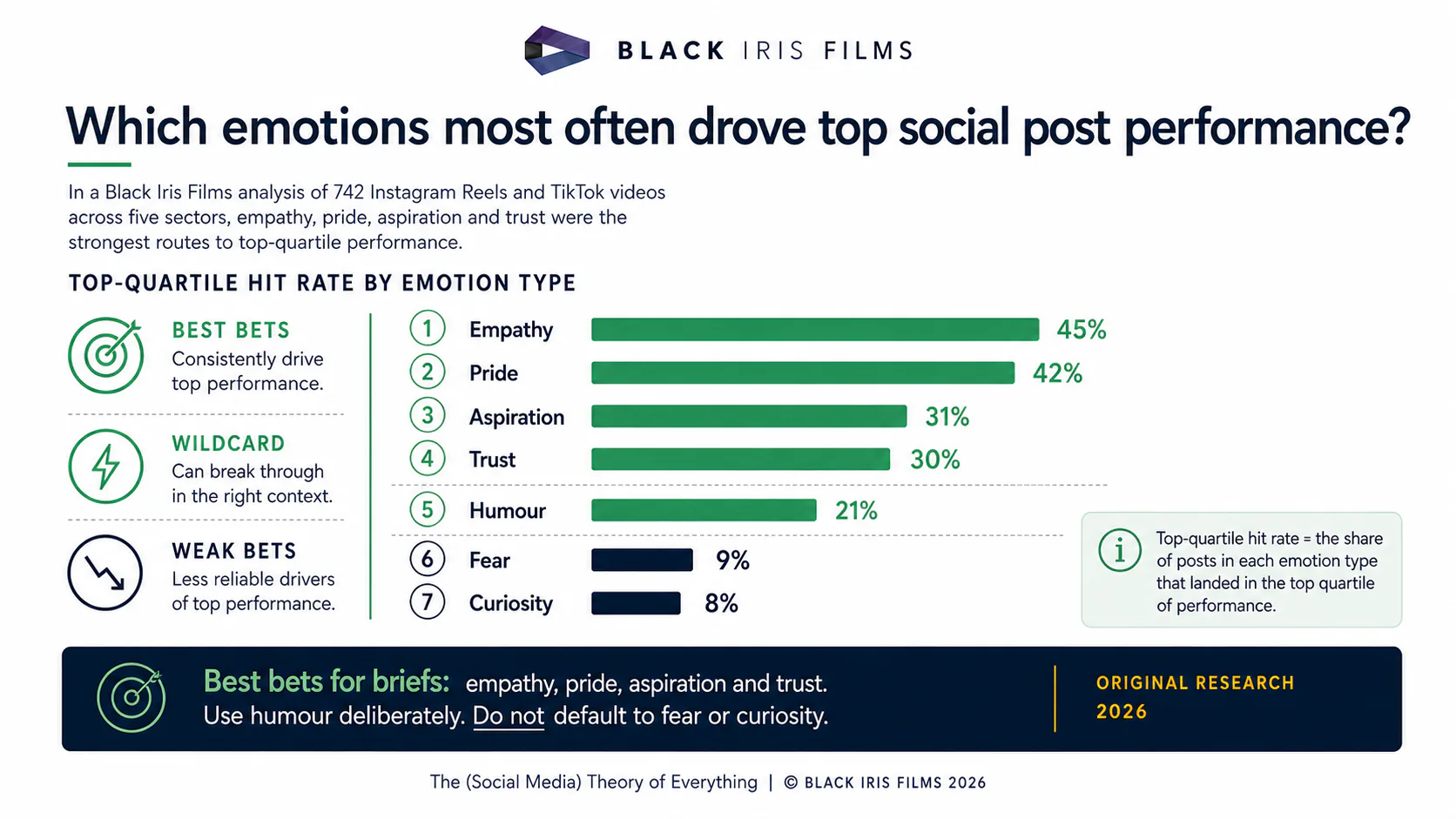
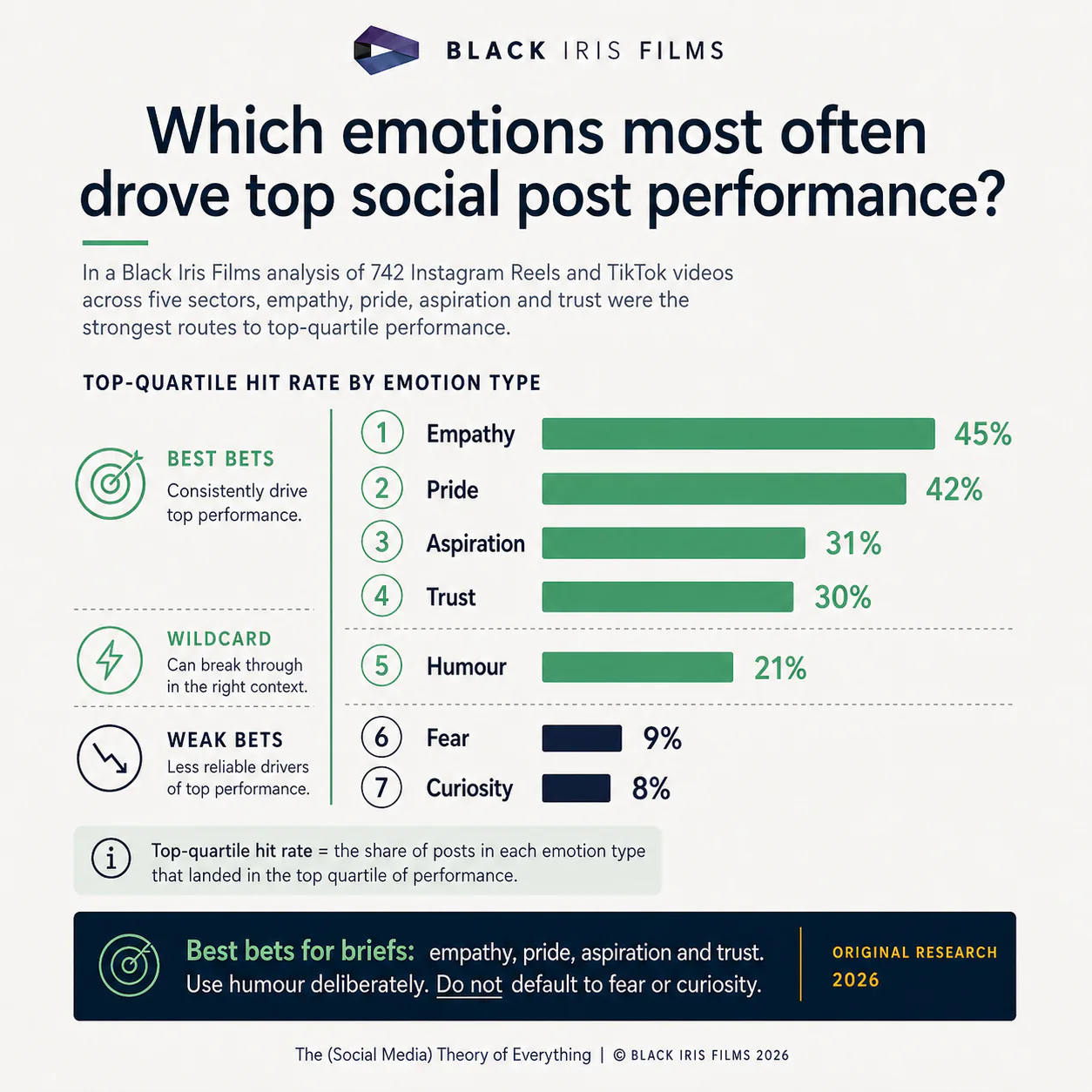
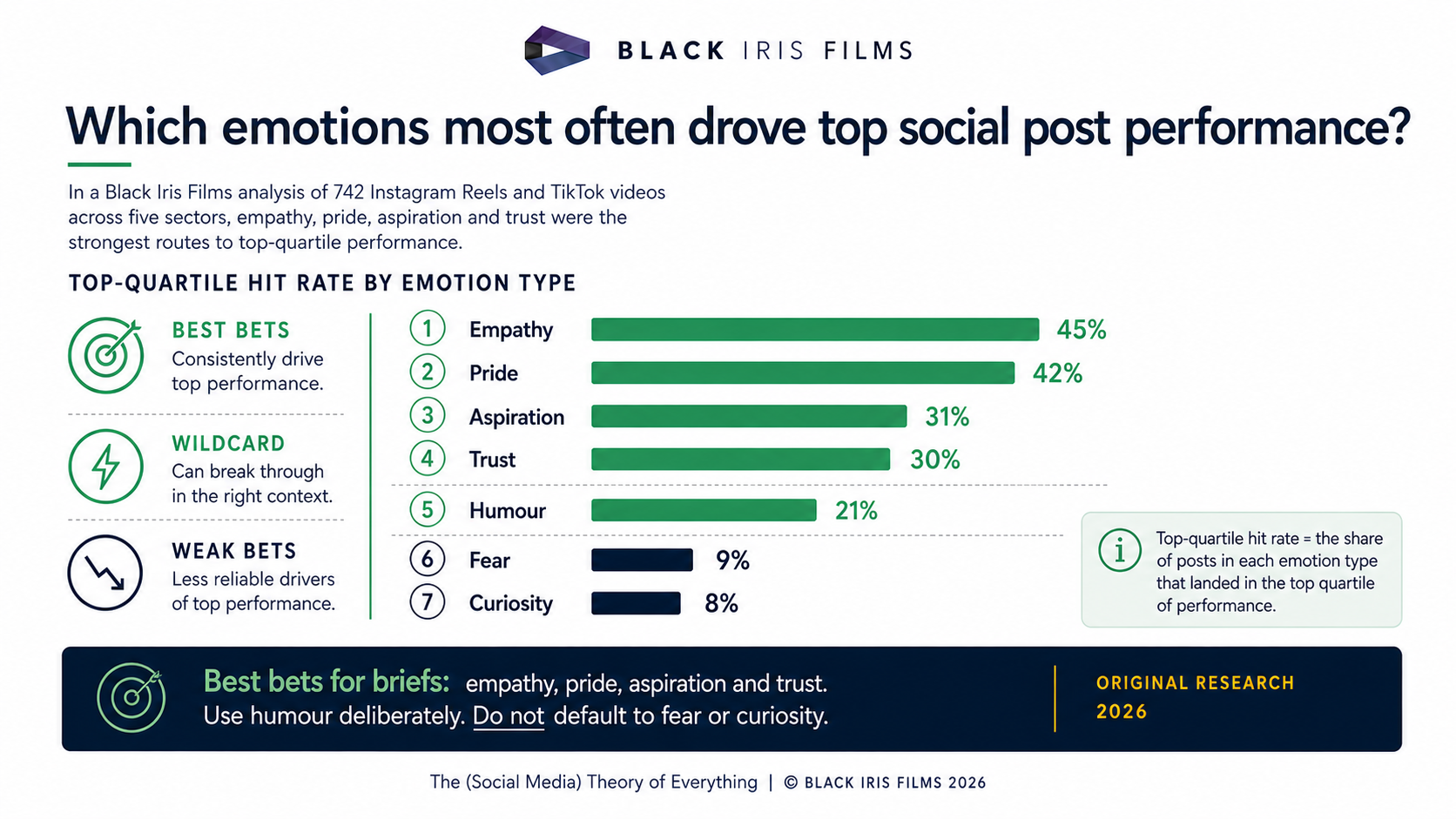
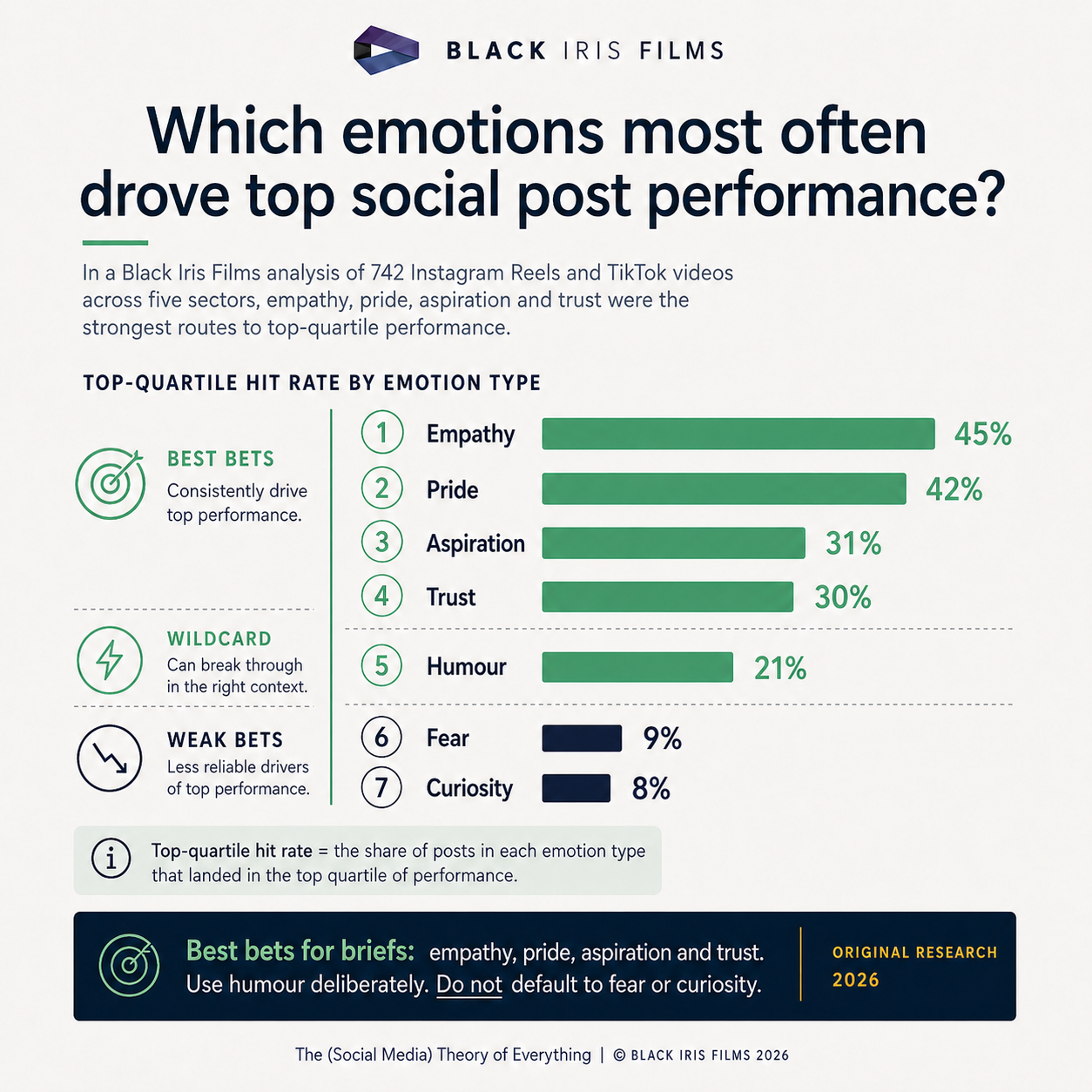
The study also found that not all emotions performed equally. Empathy, pride, aspiration and trust were the strongest routes to top-quartile performance, while fear and curiosity were among the weakest emotional bets in the dataset.
“Most brands are trying to optimise the average post,” said Titus Maclaren, founder of Black Iris Films. “But the platforms reward the posts that break out. The finding here is not just that emotion performs better. It’s that emotion raises the ceiling.”
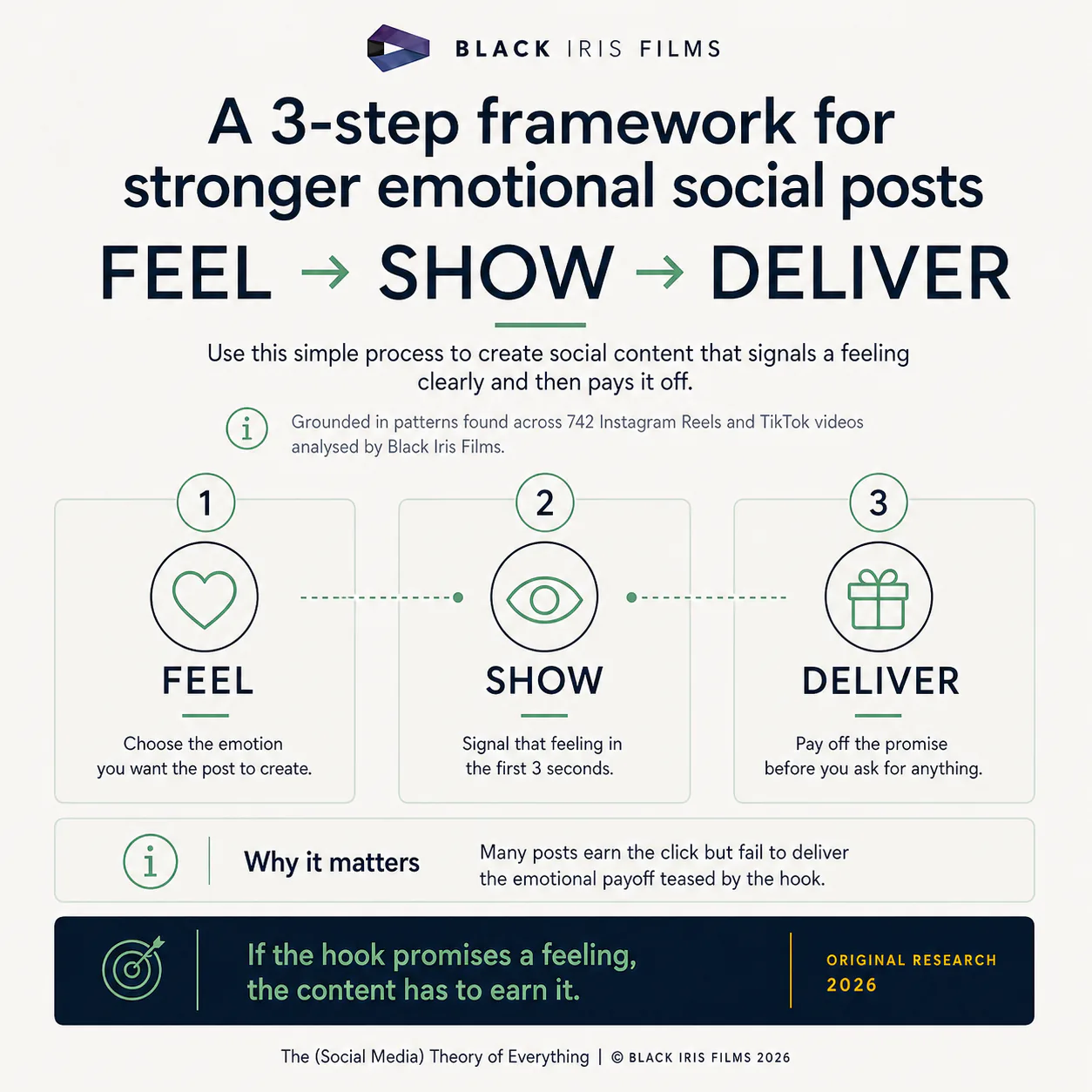
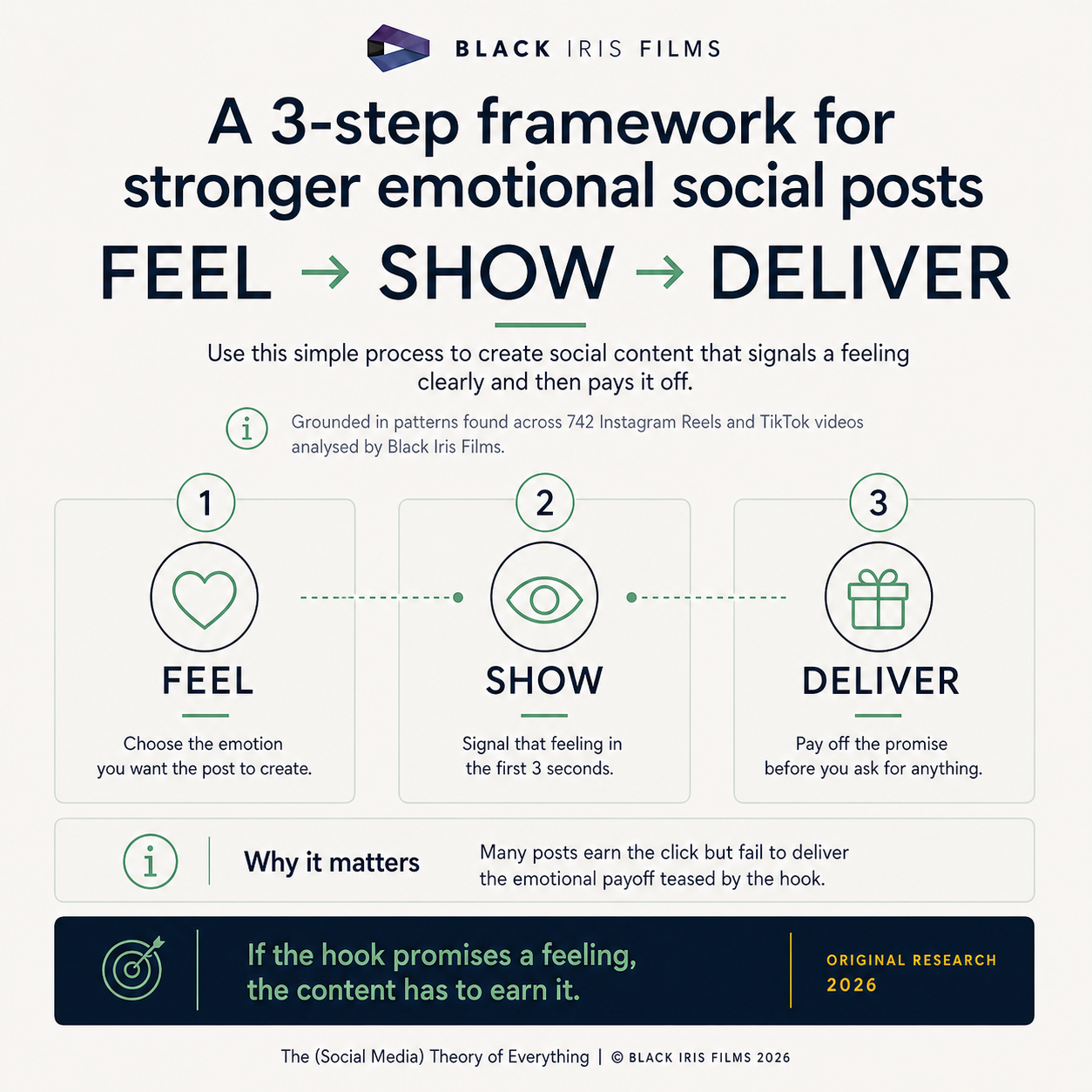
The report argues that brands should stop treating emotion as a decorative layer added after the message is written. Instead, emotional clarity should be built into the brief from the beginning: what should the audience feel, how is that feeling signalled early, and does the content actually deliver on that emotional promise?
Black Iris Films calls this the FEEL → SHOW → DELIVER framework:
FEEL: choose the emotion before briefing the idea.
SHOW: signal that feeling in the first few seconds.
DELIVER: pay off the promise before asking the audience to act.
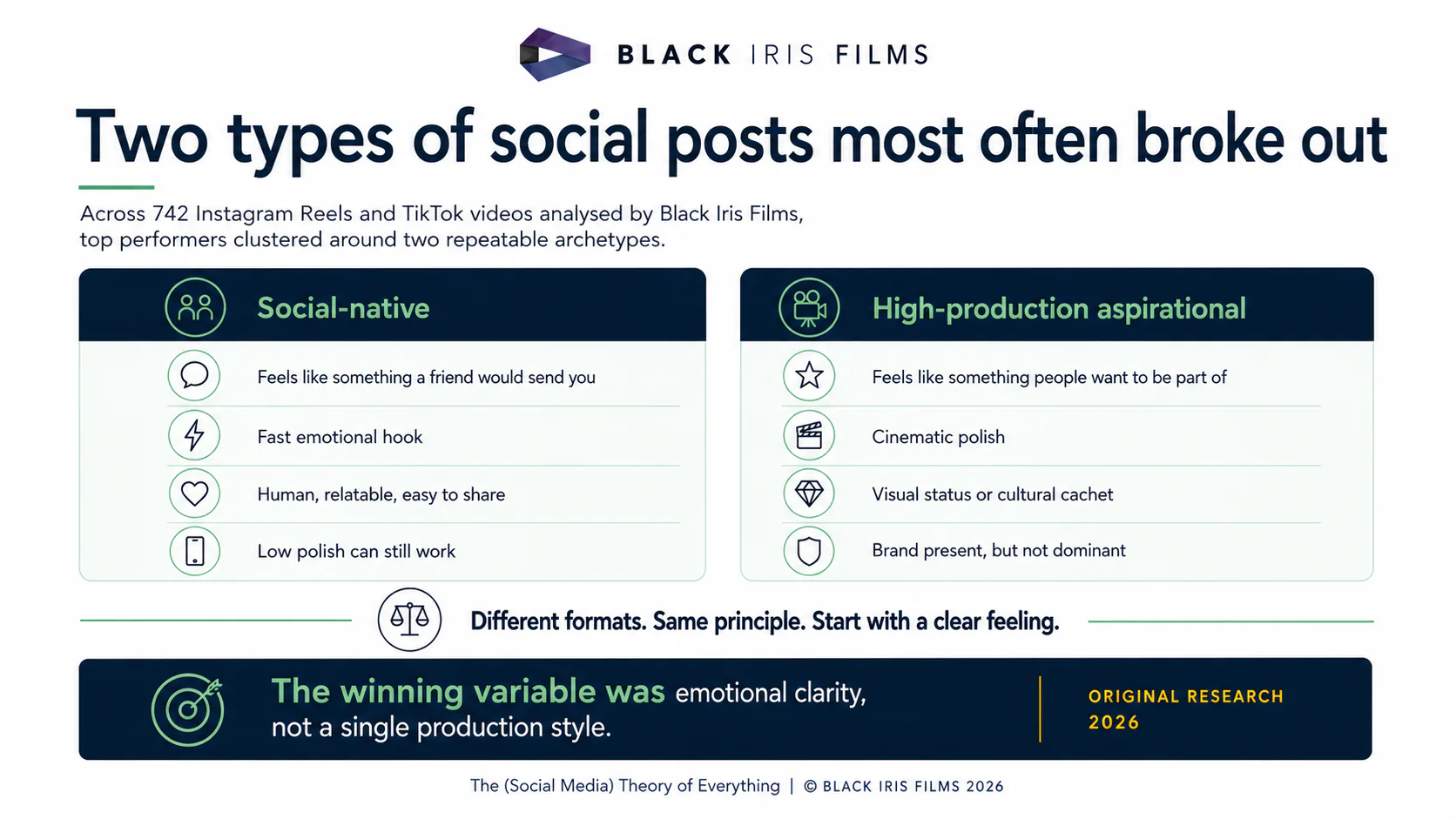
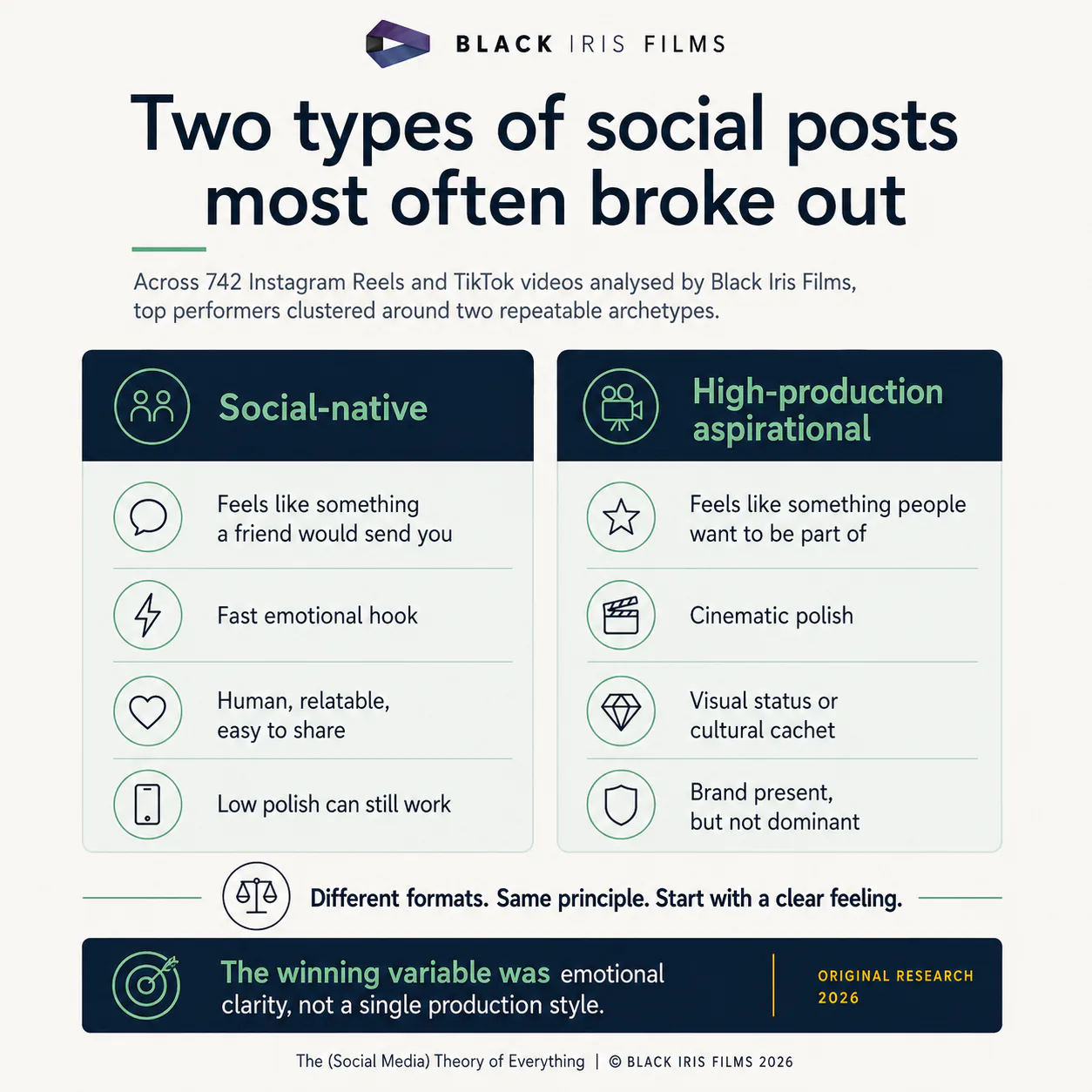
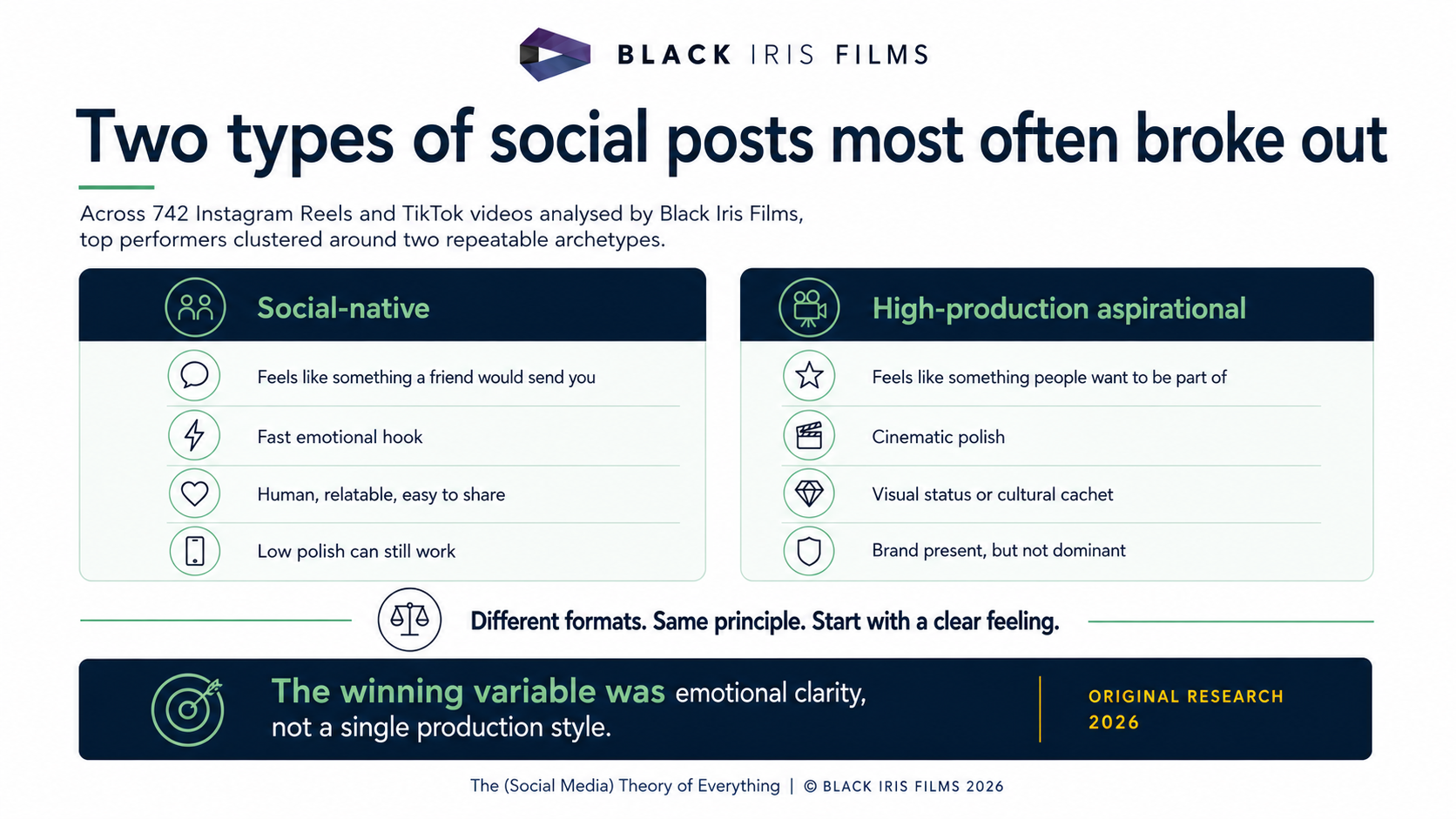
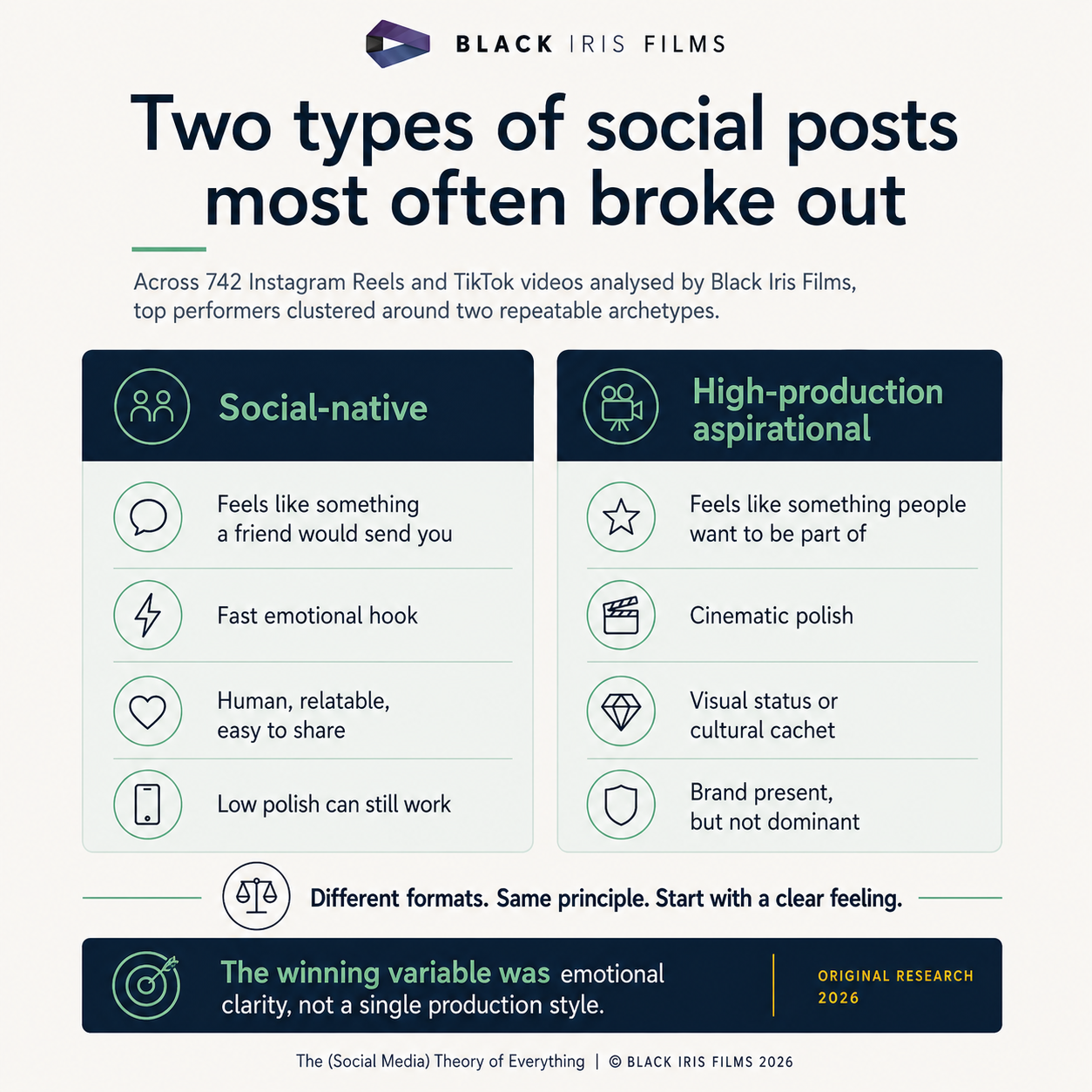
The study also identifies two common archetypes among top-performing posts: “social-native” content that feels human, relatable and easy to share, and “high-production aspirational” content that uses polish, status and cinematic craft to create desire. The winning variable, according to the report, was not one production style, but emotional clarity.
“Low-polish content can still work if the feeling is clear,” Maclaren said. “High-production content can also work beautifully, but only when the polish serves a feeling people actually want to be part of.”
The full report, key findings and downloadable media graphics are available at:
/the-social-media-theory-of-everything/media-kit
Media contact:
Titus Maclaren
Founder, Black Iris Films
titus@blackirisfilms.com
(02) 8201 3504
blackirisfilms.com